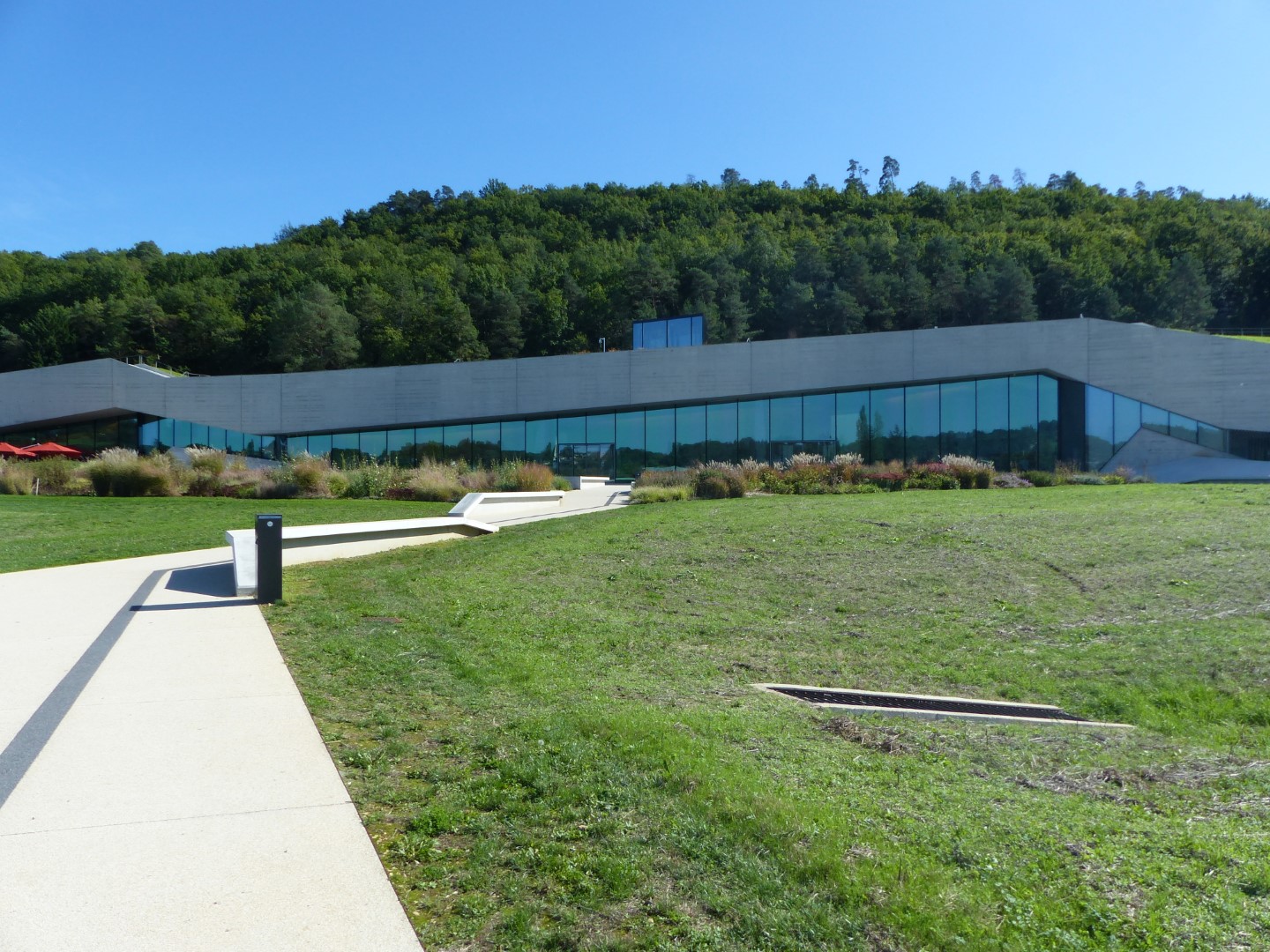
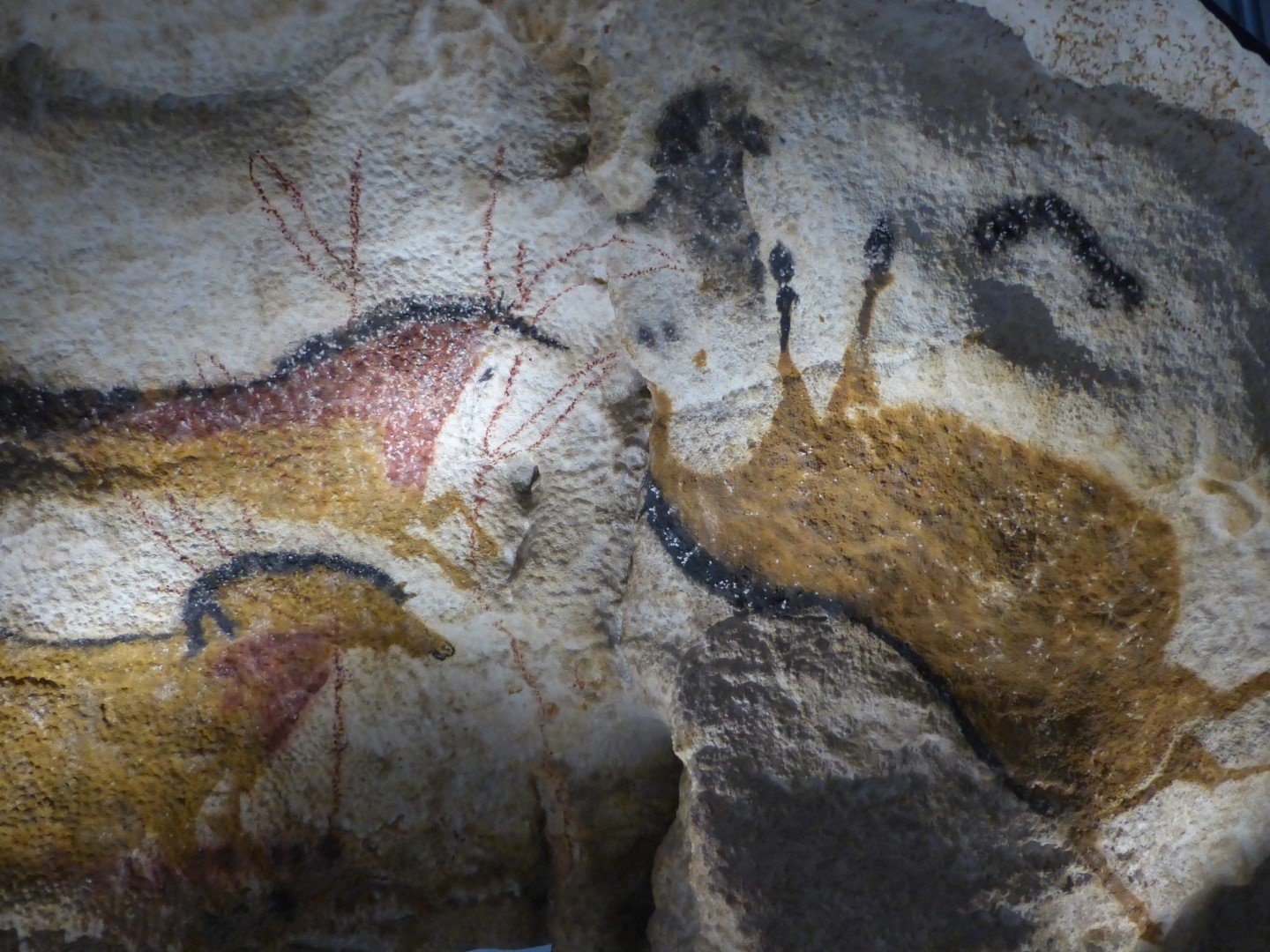
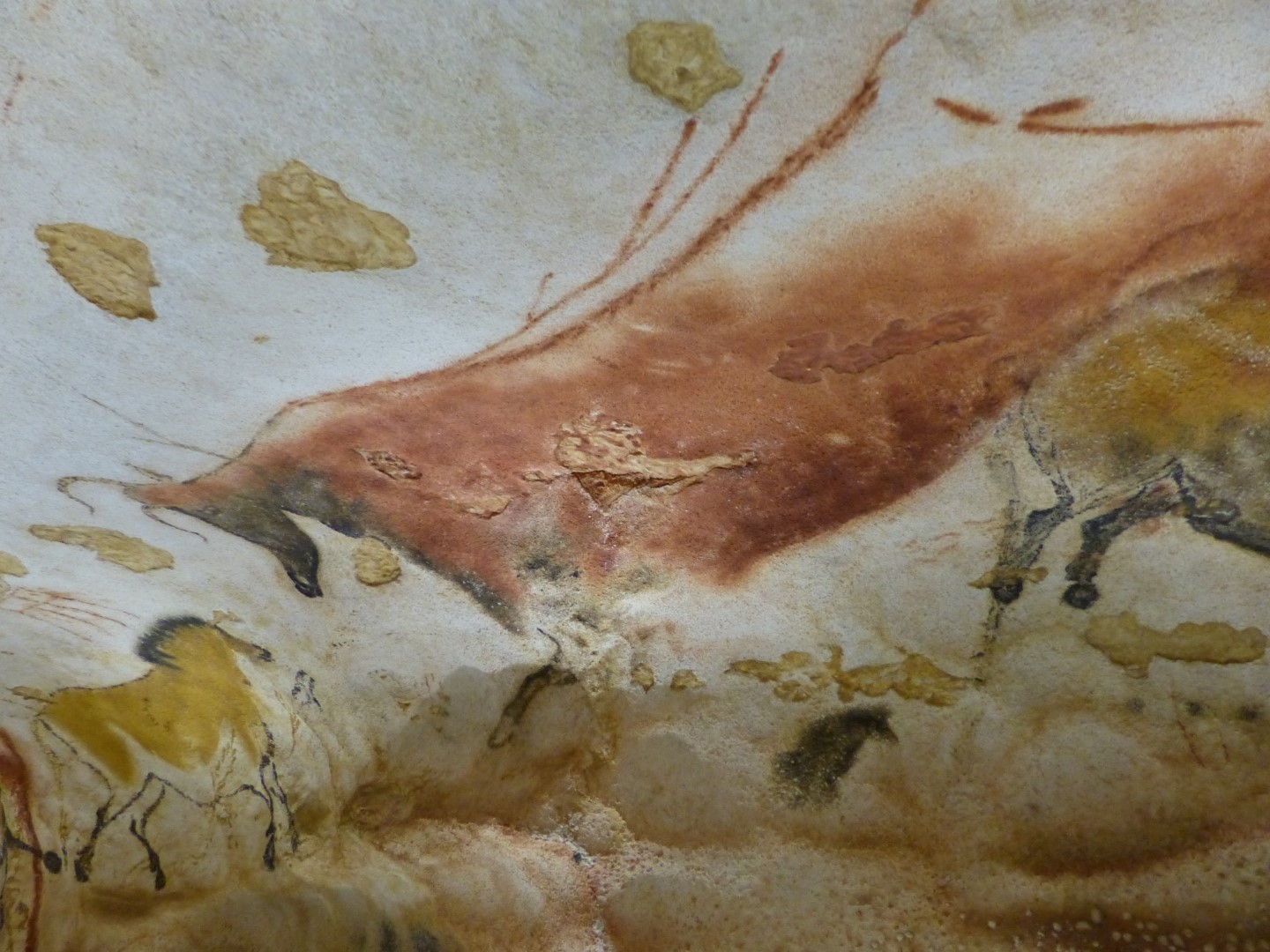
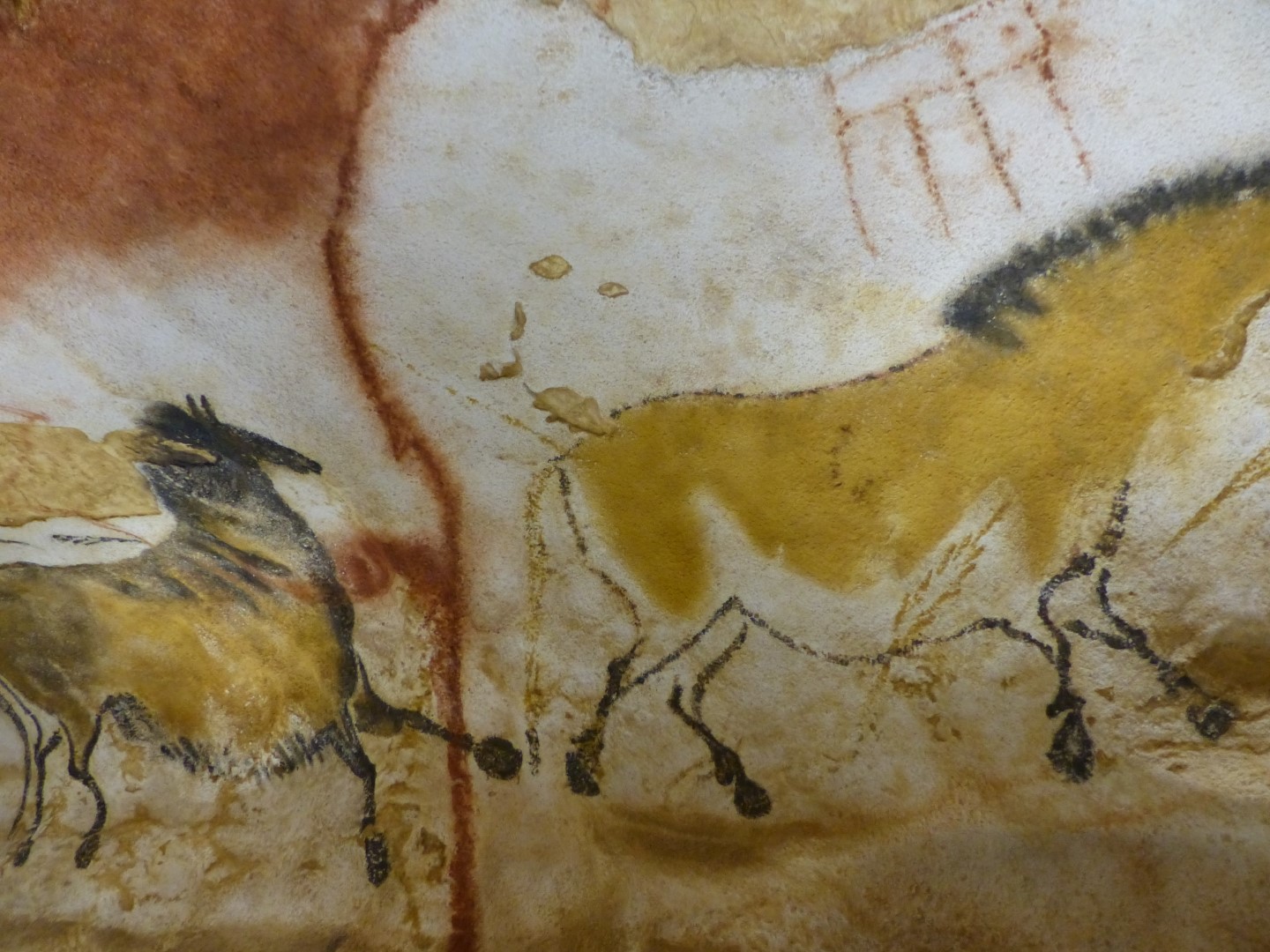
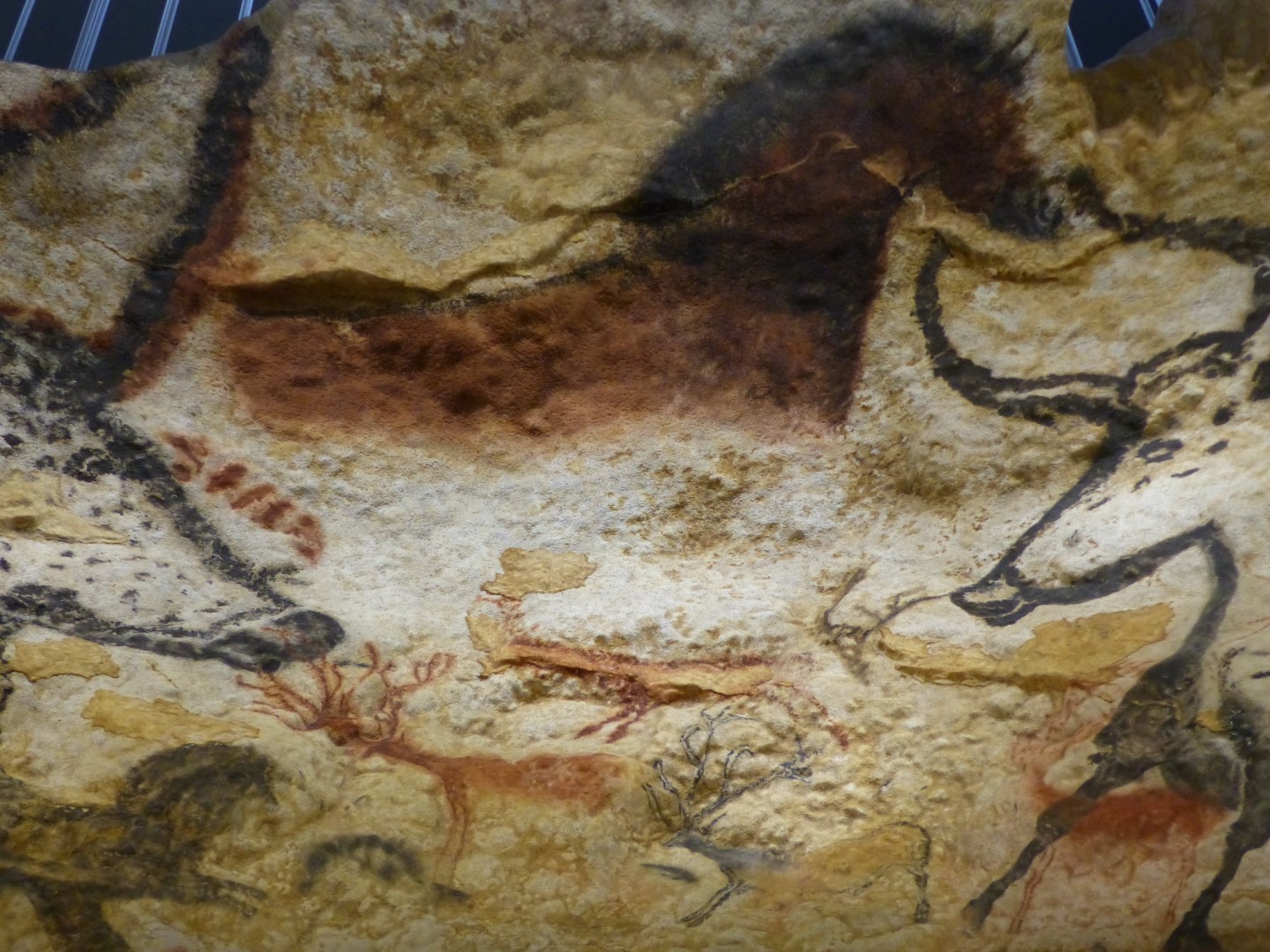
The Dordogne River and its tributaries flow through an area of major limestone deposits. As a result, the rivers have cut valleys through the limestone over the years leaving major cliff formations and grottos throughout the area. While these natural formations were often built in and fortified in medieval times, they frequently show occupation from prehistoric times. The most famous of these is probably the Lascaux Cave Paintings discovered in 1960 by four teenagers exploring a cave system that had been revealed by a fallen tree. Believed to be 17,000 years old, they are remarkable for their color and the techniques used. The actual caves are now closed to protect the paintings from the temperature and moisture fluctuations due to human presence. However, they have faithfully reproduced the entire cave system and its paintings in a new visitor center just open in 2016. It’s extremally well done and a site of major scientific importance.
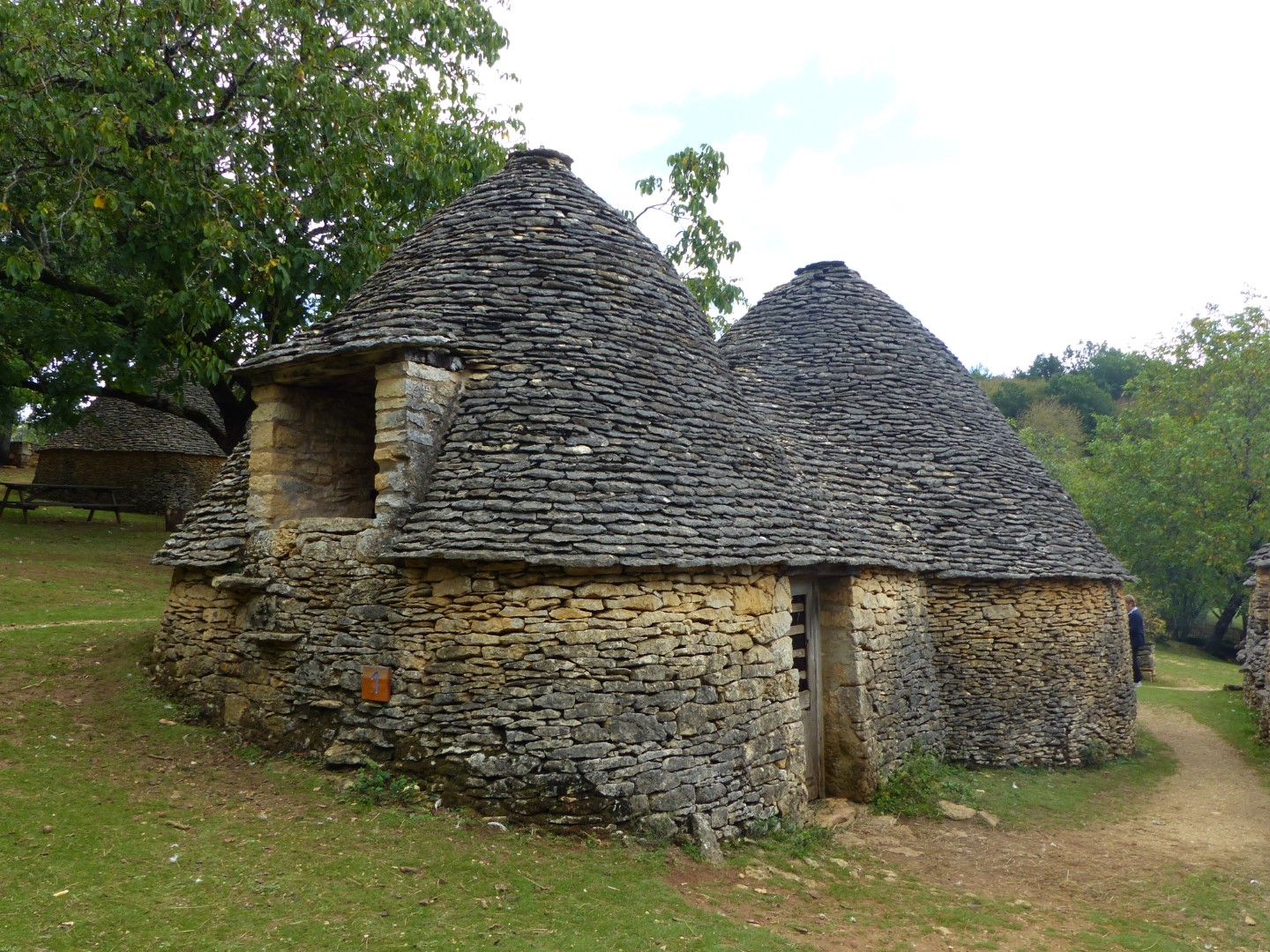
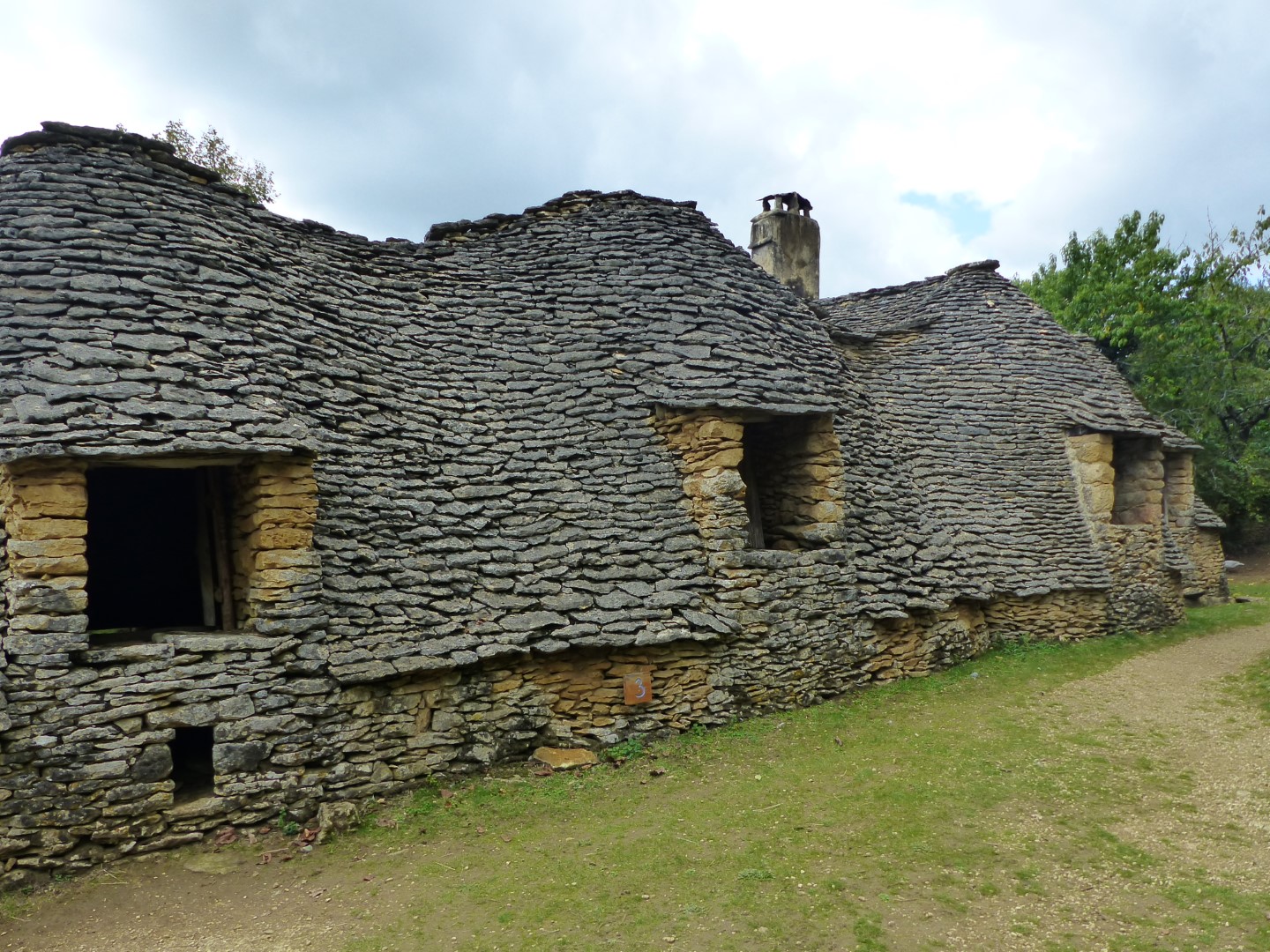
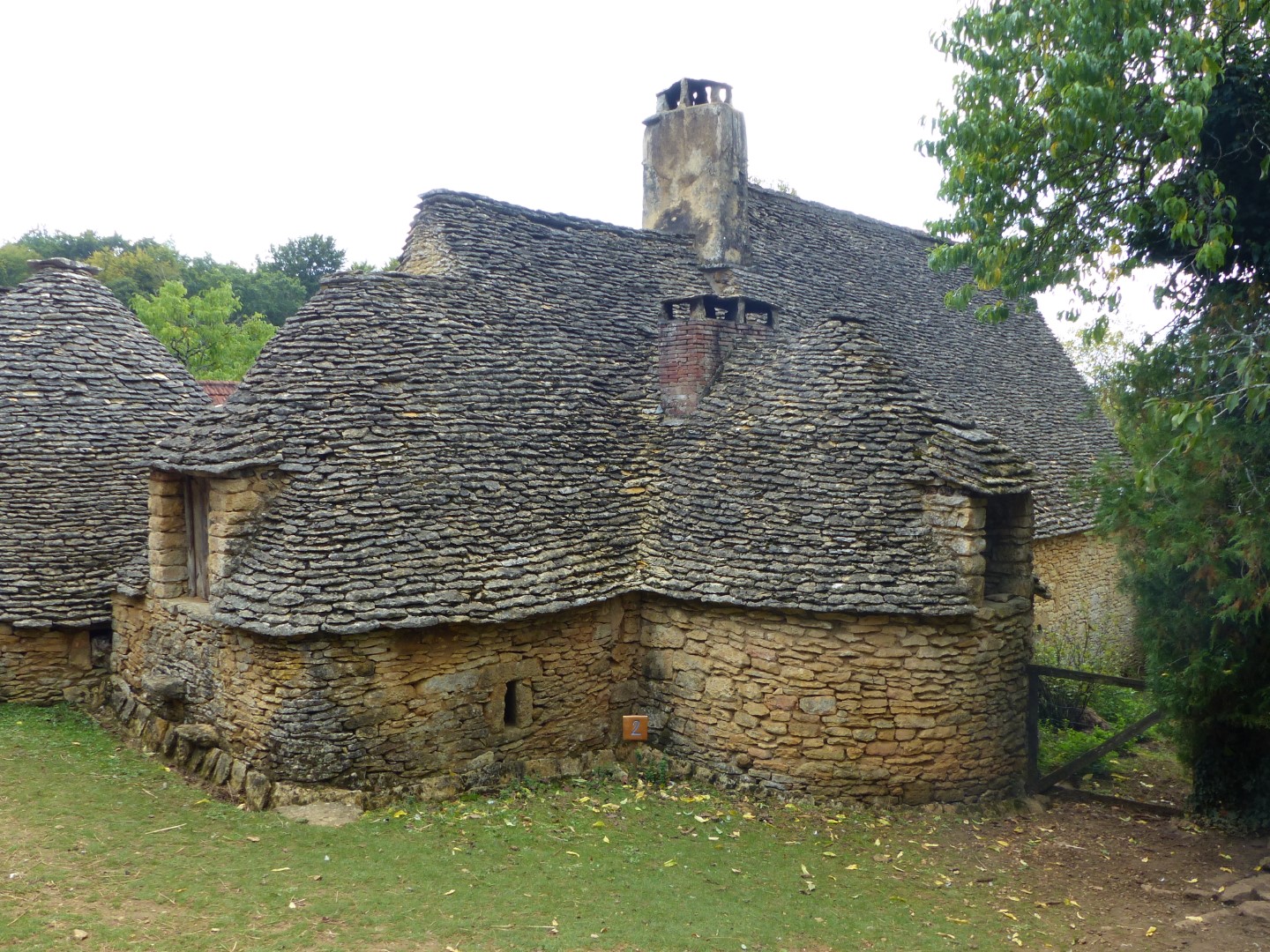
Because of the many exposed rock formations, stone is the building material of choice in the area for just about everything, even roofs! Many of the chateaux even have roofs made with flat chunks of stone layered up the roof’s supporting beams. Farmers took it one step further, making huts and farm buildings called Cabanes or Bories by dry laying of stone without the use of mortar. Using no supporting beams, the stone roofs appear to defy gravity. They were in common use in medieval times and are still seen being used as sheds on farms and country homes. ‘Les Cabanes du Breuil’ that we visited is a working farm that has one of the larger groupings of these unique structures and keeps the art form alive.
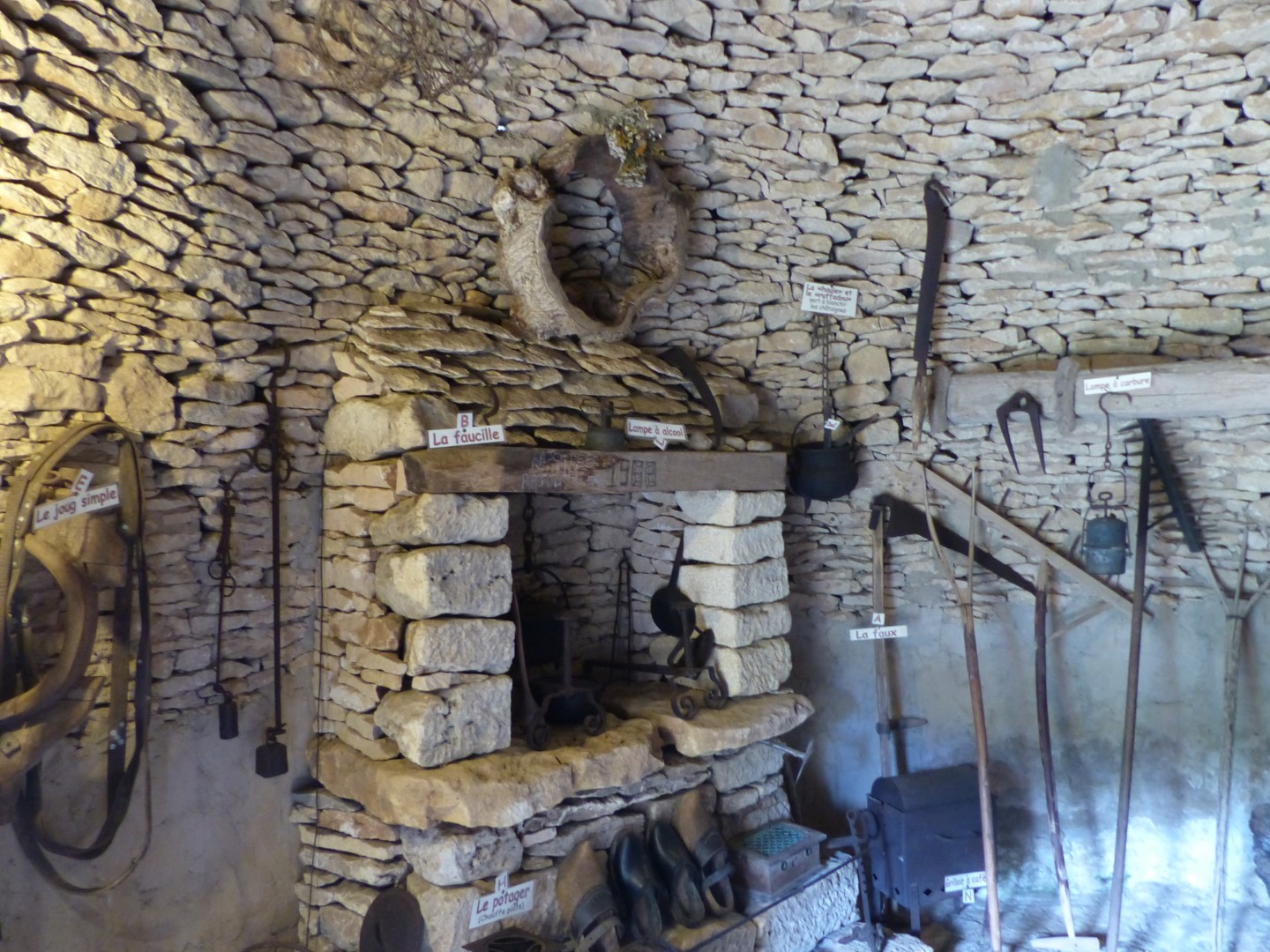
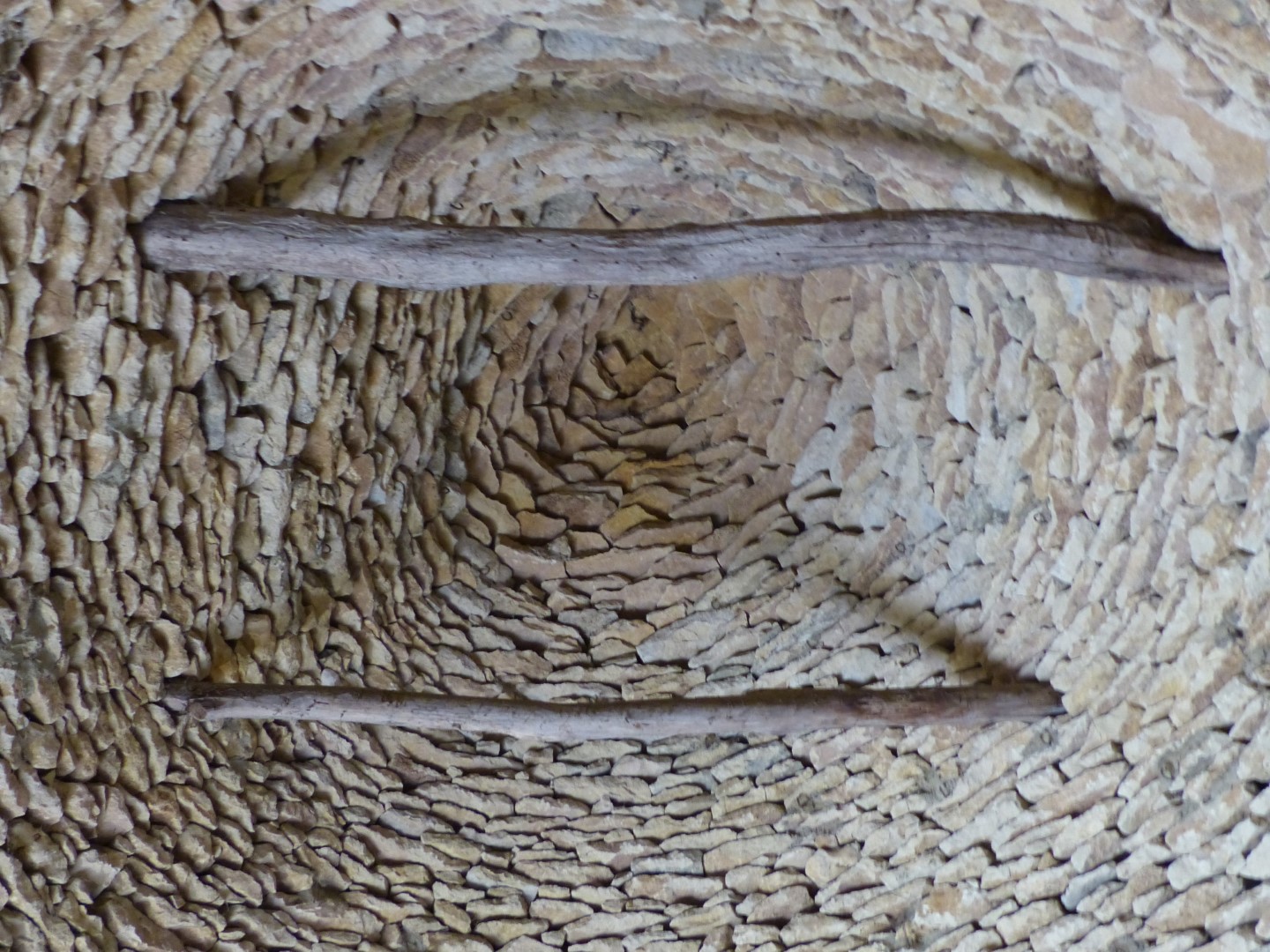

the stone laying is a real art form. I loved the stonewalls in England – so impressed and this takes it to another level.
Pretty impressive buildings those cabanes.
Truly amazing. Finally had time to sit and enjoy your travels.
I want to carry your luggage on the next trip. unfortunately I’m to old so I will “travel” with you thru my computer.